Blog
Create a Healthy Diet Plan for Seniors at Home

Eating well at home can be one of the simplest ways for seniors to stay energetic, strong, and happy each day. A healthy diet does not have to feel strict or complicated. It can be colorful, comforting, and enjoyable, especially when meals are planned with everyday foods that are easy to prepare.
With a little creativity and a relaxed approach, you can help an older loved one build a routine that supports good health and keeps mealtime fun.
Start With the Basics: What Seniors Really Need
A good diet plan begins with understanding what the body needs as it ages. Seniors often require fewer calories but more nutrients. Protein helps maintain muscle strength. Fiber keeps digestion smooth. Calcium and vitamin D support bone health. Colorful fruits and vegetables add vitamins that help the immune system and overall wellness. Home care services for seniors can help you create a perfect meal plan.
Hydration is another essential part of a healthy diet. Many seniors forget to drink water throughout the day, or they simply do not feel as thirsty as they used to. If they are using dietary supplements like d mannose supplement in their routine, taking a good amount of water keeps their body hydrated enough. Keeping a water bottle nearby or offering flavored water, tea, or broth can make staying hydrated easier.
Taste also changes with age. Foods that once tasted bold may seem plain today. This is why adding herbs, fresh lemon, or gentle spices can help bring back flavor without relying on too much salt or sugar. Small changes can make meals much more enjoyable.
Build a Plate That Makes Sense
Balanced meals are the foundation of a strong diet plan. A simple guide is to divide the plate into sections. Half of the plate should be fruits and vegetables. One quarter should be lean protein such as chicken, fish, eggs, or beans. The last quarter can be whole grains or starchy vegetables such as brown rice, quinoa, or sweet potatoes.
Portion sizes are important too. Seniors do not always need large meals. In fact, smaller and more frequent meals can feel more comfortable. A few light meals and snacks spread throughout the day can help keep energy levels steady. Colorful foods also make meals look more appealing. When a plate looks fresh and vibrant it is more likely to encourage appetite and interest.
Breakfast Ideas That Start the Day Right
Breakfast sets the tone for the rest of the day. It is easier to stay energized when the morning begins with nutritious and enjoyable foods. Some seniors prefer a light breakfast such as yogurt with berries, oatmeal with honey, or whole grain toast with peanut butter. These are all quick, easy, and full of nutrients.
For seniors who need more protein, scrambled eggs, cottage cheese bowls, or protein smoothies can be great choices. Adding fruit to any breakfast helps increase fiber and vitamins. For those who like a sweeter start, sliced bananas on oatmeal or cinnamon apples on whole grain pancakes can satisfy cravings while still keeping breakfast healthy.
Lunches That Do Not Feel Bland
Lunch should feel fresh and flavorful. A simple turkey sandwich with lettuce and tomato on whole grain bread can be both tasty and nutritious. Chicken salad wrapped in a tortilla, lentil soup with a small side salad, or tuna on whole grain crackers can bring variety to the day.
Adding vegetables is easy when they are chopped and ready in the fridge. Carrot sticks, cucumber slices, cherry tomatoes, or sliced peppers can be served with hummus for a fun and healthy side. A bowl of fruit or a cup of soup can complete the meal in a satisfying way. Seniors who prefer warm meals can enjoy leftovers from dinner, homemade stews, or easy slow cooker dishes that do not require much work.
Dinner That Feels Cozy
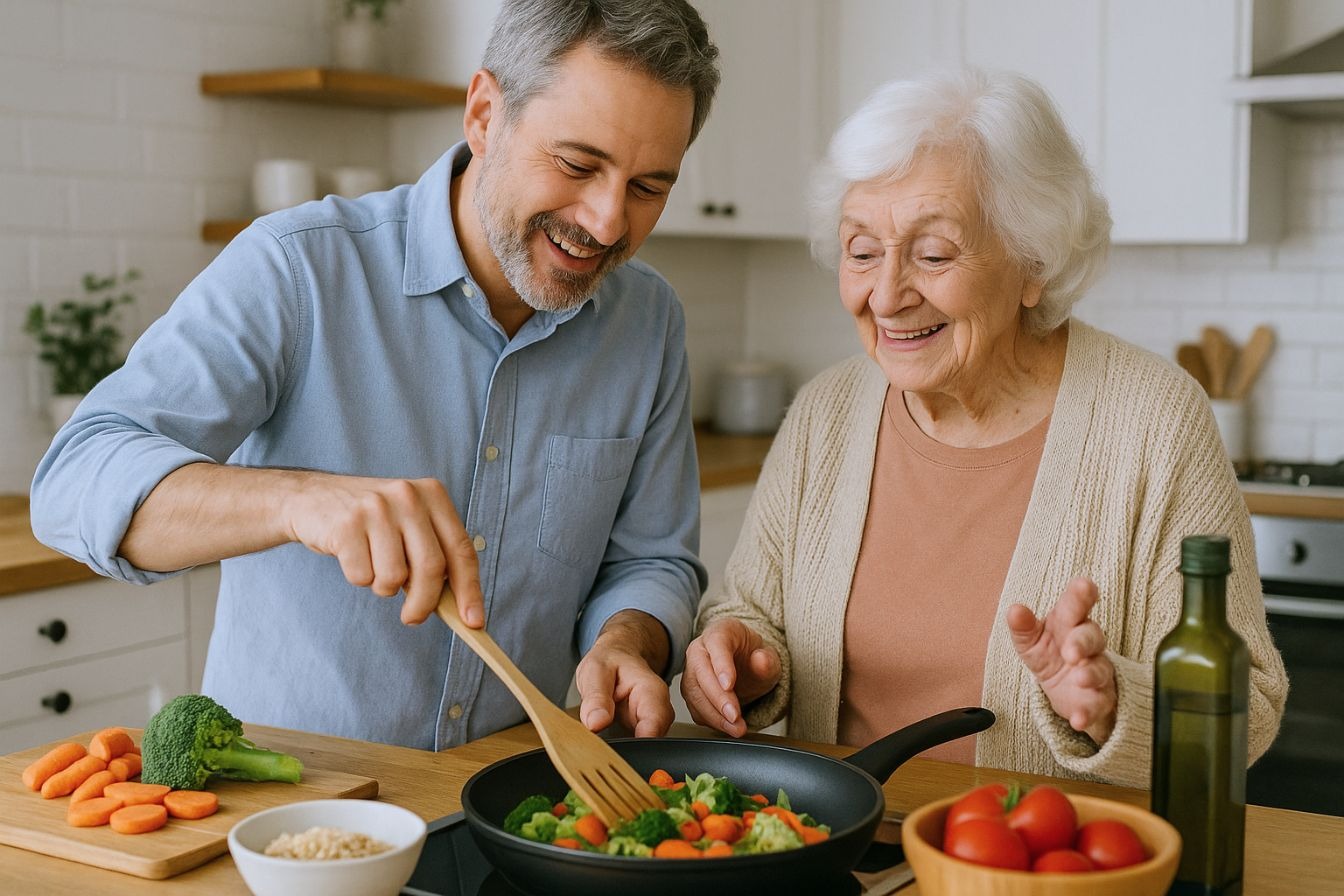
Dinner is often the most comforting meal of the day, and it can be a perfect time to relax and enjoy something warm. Comfort foods can be made healthier with small adjustments. For example, baked chicken instead of fried chicken keeps the flavor without the extra oil. A bowl of vegetable soup, a plate of baked salmon with green beans, or a stir fry loaded with vegetables can provide a sense of home and warmth.
Salt intake is often a concern for seniors, but meals can still taste great with herbs, garlic, onion, paprika, and citrus. A squeeze of lemon over vegetables can brighten the flavor without adding sodium. Slow cookers and sheet pan dinners make it easy to prepare meals with little cleanup. These simple techniques help keep dinner enjoyable while supporting good health.
Snacks That Help, Not Hurt
Snacks play an important role in a senior diet plan. A healthy snack can keep energy steady and prevent overeating at mealtimes. Good options include cheese cubes with whole grain crackers, apple slices with peanut butter, a handful of nuts, Greek yogurt, or fresh berries.
Some seniors love sweeter choices. Instead of cookies or candy, you can offer fruit cups packed in water, oatmeal bars with low sugar, or small portions of dried fruit. Savory snack lovers might enjoy popcorn, roasted chickpeas, or sliced vegetables with dip. Snacks should feel fun, not restrictive. The goal is to find healthier versions of foods they already enjoy.
Make Meal Prep Easy
Meal planning becomes much simpler when you prepare ahead. Setting aside one day each week to chop vegetables, cook a batch of chicken, or portion out snacks can save time during busy days. Storing leftovers properly helps reduce waste and makes it easier to pull together quick meals.
Creative use of leftovers can bring new life to familiar foods. Leftover chicken can become chicken salad. Cooked vegetables can be added to soups or omelets. Rice from last night can be turned into a veggie stir fry.
Simple tools and gadgets can make cooking safer for seniors. Easy grip utensils, non-slip cutting boards, microwave safe dishes, and slow cookers take stress out of meal preparation. These small changes can make a big difference in maintaining independence and comfort in the kitchen.
Keep Mealtime Social and Enjoyable
Food is more than nutrition. It is a moment to connect. Many seniors eat better when they have company at the table. Sharing meals with family members, friends, or caregivers can turn ordinary meals into warm and cheerful experiences. Good conversation often improves appetite and creates a positive association with eating.
Even when eating alone, seniors can benefit from a pleasant setup. Playing soft music, opening the curtains, or arranging the table nicely can make meals feel special. Encouraging an older adult to enjoy their food slowly can help with digestion and mindfulness.
When to Adjust the Plan
Healthy diet plans are not one size fits all. Changes in appetite, medications, or dental issues such as abscesses in your teeth, as well as overall health, may require adjustments over time. If a senior is losing weight, feeling fatigued, or showing signs of low appetite, it may be helpful to adjust meal frequency or add calorie dense healthy foods such as avocados, nut butters, or smoothies.
A doctor or dietitian can provide guidance on specific dietary needs. If a senior receives elderly personal care services, caregivers can also help monitor changes and keep meals consistent and safe. Families who use home care services often find it easier to maintain healthy routines because professional support can ensure that meals are planned, prepared, and served safely.
Meal Planning Made Easy
Creating a healthy diet plan for seniors at home is more about simplicity and consistency than strict rules. With colorful foods, balanced meals, easy snacks, and thoughtful preparation, you can make eating well an enjoyable part of everyday life.
Focus on foods that taste good, feel good, and support long term health. Small steps can make a big difference in keeping seniors nourished, comfortable, and happy at home.
Photo Gallery




Comments