Blog
Family Dinner Rituals That Make Kids Braver at the Dentist, Doctor, and Beyond
My youngest cried at every single appointment until she was seven. Not the loud, dramatic kind of crying. The quiet kind, where she'd go stiff as a board and stare at the ceiling tiles like they held the exit code. We tried sticker charts, pep talks in the car, even a bribe involving a very specific stuffed capybara. Nothing touched it.
What finally worked had
nothing to do with the dentist at all. It started at our dinner table, where we
did the same small thing every night for a few weeks: we practiced being fine.
Turns out that's the whole trick. Kids who get a predictable, low stakes
rehearsal loop at home walk into unfamiliar rooms with less fear, and dinner is
the cheapest rehearsal space you'll ever find.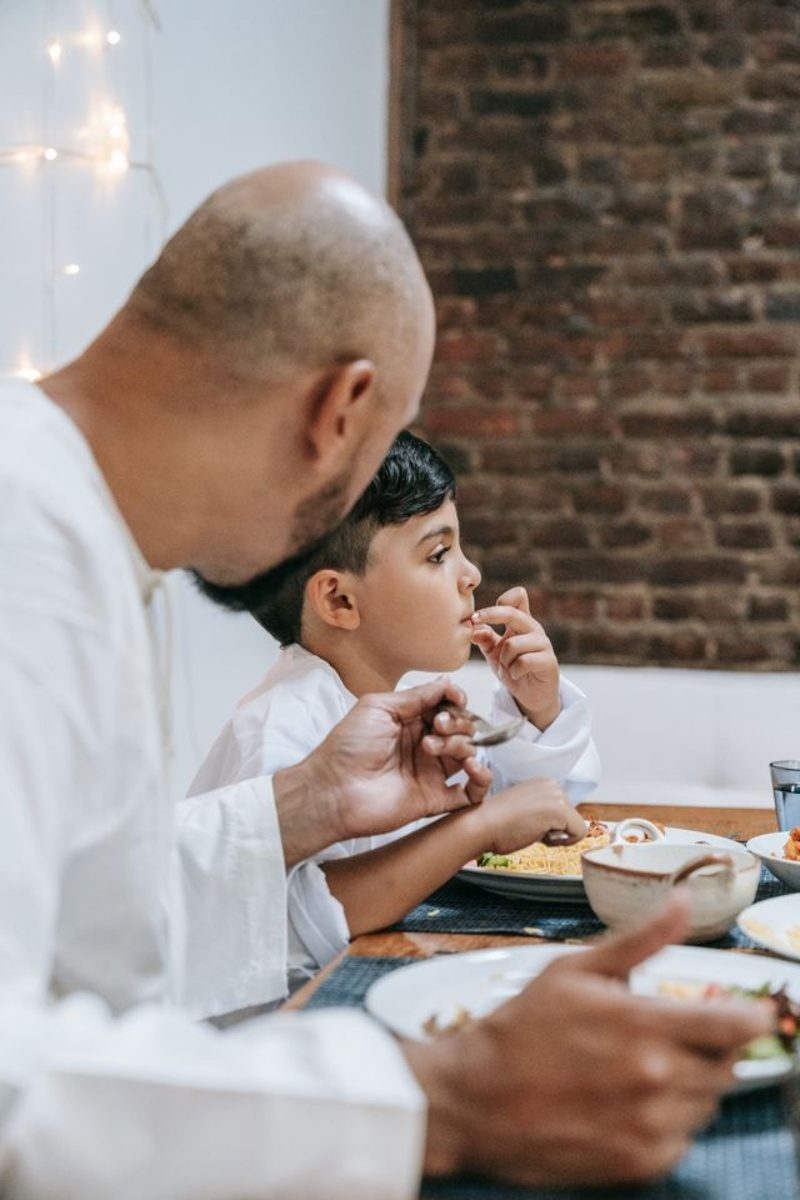
Photo by Timur Weber
The rehearsal loop most parents skip
Here's what I got wrong for years. I treated appointments as events. Big day, big feelings, big talk on the drive over. But phobias don't respond to one great speech before an event. They respond to repetition in a place that feels safe.
Dinner already does this for other scary things. Think about how a kid learns to talk about a hard day at school. Not in a formal sit down. It's the passing of the green beans, the random question about somebody's lunch, the third night in a row of the same pasta shape. That low pressure rhythm is why dinner works. Nobody's staring. Nobody's waiting for an answer.
Predictability does measurable work here. According to the CDC, children thrive on consistent routines, and structured family meals are one of the most studied routines in child development. The key word is consistent. One dinner where you talk about the dentist does nothing. Four dinners in a row where the topic just happens to float by builds a groove.
So the ritual is simple.
Pick one mealtime a week. Add one question. Keep it weirdly boring on purpose.
Why the topic matters less than the tone
I used to make the mistake of asking my kids how they felt about going to the doctor. That question hands a kid a problem to solve. Better to narrate your own boring experience and let them eavesdrop.
"I have my checkup Thursday. I'm going to sit in the waiting room and read two pages of my book, and then a nurse will call my name."
That's it. No reassurance. No "and it'll be so fun!" Reassurance tells a kid there was something to worry about. A boring itinerary tells them the whole thing fits inside a normal day.
You can do the same for
dental visits before kids ever sit in a chair. The American Academy of
Pediatric Dentistry stresses that early, positive dental experiences
shape how a child feels about oral care for years. That's the reason I stopped
springing appointments on my kids as surprises. Surprises are for birthdays.
Medical care should be the least surprising thing on the calendar.
Table tactics that actually calm kids down
After a lot of trial and error, four things stuck in our
house. None of them cost money and all of them work better than a pep talk.
●
Name the room, not the procedure.
"We're going to a room with a big chair" beats "the doctor is
going to look at your throat." Kids fear the unknown, not the known.
●
Let them hold one small decision. Pick
the outfit, pick the snack for after, pick the song in the car. One choice is
enough to shift the power balance.
●
Tell a story about your own nervous
appointment. Not one where you were brave. One where you were nervous and
it was fine anyway. That's the model you want them to copy.
●
Skip the reward talk. A promised toy
turns the appointment into a transaction, and kids start negotiating with their
own fear. Bring the treat anyway. Just don't bill it in advance.
Notice what's missing.
There's no script for the kid. You're not telling them what to say or how to
feel. You're giving them the layout of the day so their brain can stop doing
threat assessment on the drive over.
One dinner question that does heavy lifting
Our family's version is: what's one boring thing
happening this week?
The word boring is the whole trick. It gives kids permission to be unimpressed. Last month my son answered with "you have to sit in the waiting room at my orthodontist appointment," and then he asked whether the chairs there recline. That's a kid engaging with the logistics instead of the dread. Small win, but real.
You can aim this question at any appointment on the calendar. A first orthodontic consult is a good target because it usually includes a look at a mouth, a conversation about braces or clear aligners, and possibly a plan that starts months later. Kids do better when they know the visit might end in "we'll watch it for now" rather than a decision.
If your family is anywhere in Northern Virginia, this is also where local logistics sneak into the conversation. Families in Chantilly and the surrounding neighborhoods often sort out a first consult by asking around at dinner tables instead of scrolling reviews, which is how most of my own recommendations have traveled. Word of mouth still beats a star rating.
For a first visit to an orthodontist in South Riding, VA, families can
treat it as a low-stakes errand rather than a milestone. A consult is mostly
information. Knowing that ahead of time removes the pressure your kid is
probably feeling.
What to do the week of the appointment
The dinner ritual is the foundation. The week of, you're
just reinforcing it without letting the event balloon.
1.
Say the day out loud at least twice.
Tuesday at dinner, Thursday morning. Normalize it.
2.
Do a five minute walk through. Where
you'll park, how long you'll wait, who goes in with them.
3.
Keep the morning boring. Same breakfast,
same route. Novelty is the enemy.
4.
Plan the after. Not a reward. Just a
normal next thing, like the library or a sandwich.
5.
Skip the debrief interrogation. If they
bring it up, follow. If they don't, let it go.
One honest caveat. This
works for ordinary nerves. If your child has real, lasting fear around medical
or dental care, or if anxiety is showing up in sleep and school, that's a
conversation for a pediatrician or a child therapist, not a dinner table hack.
The Mayo
Clinic has solid plain language guidance on when childhood anxiety
needs professional support. Knowing that line matters more than any tactic
below it.
Do the boring version
The reason this works is the same reason it feels underwhelming. You're not fixing fear. You're draining the drama out of the calendar, one unremarkable dinner at a time, until a visit to a new office is just another Tuesday errand with a waiting room and a nice person who says your kid's name.
Start this week. Pick one night, ask the boring
question, and see what your kid volunteers. My guess is they'll surprise you,
and it probably won't be about teeth at all.
Photo Gallery




Comments