Blog
From Still Water to Stunning Scenery: Everything You Should Know Before Building a Backyard Waterfall

If you've ever stood beside a natural waterfall and felt an immediate sense of calm settle over you, you'll understand why so many homeowners are bringing that experience into their own backyards. The good news is that creating a water feature of your own has never been more accessible. A well-chosen waterfall kit can take what seems like a complex landscaping project and break it down into something manageable, rewarding, and genuinely beautiful. But before you dive in, understanding what's involved — from planning and components to installation and upkeep — makes the whole process significantly smoother.
Why Waterfalls Deserve More Credit Than They Get
There's a tendency to view garden waterfalls as a luxury addition — something nice to have, but ultimately optional. That perspective undersells what moving water actually contributes to an outdoor environment.
From a purely ecological standpoint, a waterfall introduces oxygen into pond water, which is essential for fish health and the activity of beneficial bacteria that keep water clean and balanced. Without adequate oxygenation, pond ecosystems deteriorate. Fish become lethargic, algae dominate, and the water turns murky and unpleasant.
From a human wellbeing perspective, the science is equally compelling. Research in environmental psychology consistently shows that exposure to flowing water reduces cortisol levels, lowers perceived stress, and improves mood. The sound of water falling over rocks activates the same neural pathways associated with relaxation and deep rest. It's not simply a pleasant background noise — it's a genuinely therapeutic presence in a garden.
Then there's the practical benefit of mosquito deterrence. Moving water is inhospitable to mosquito larvae, which require still, stagnant water to develop. A waterfall keeps water in constant motion, making the pond far less attractive as a breeding ground.
What Comes in a Waterfall Kit?

Understanding what a waterfall kit typically contains helps set realistic expectations and ensures you purchase the right components for your specific setup. While kits vary in complexity and scope, most include some combination of the following core elements.
The Spillway or Weir Box
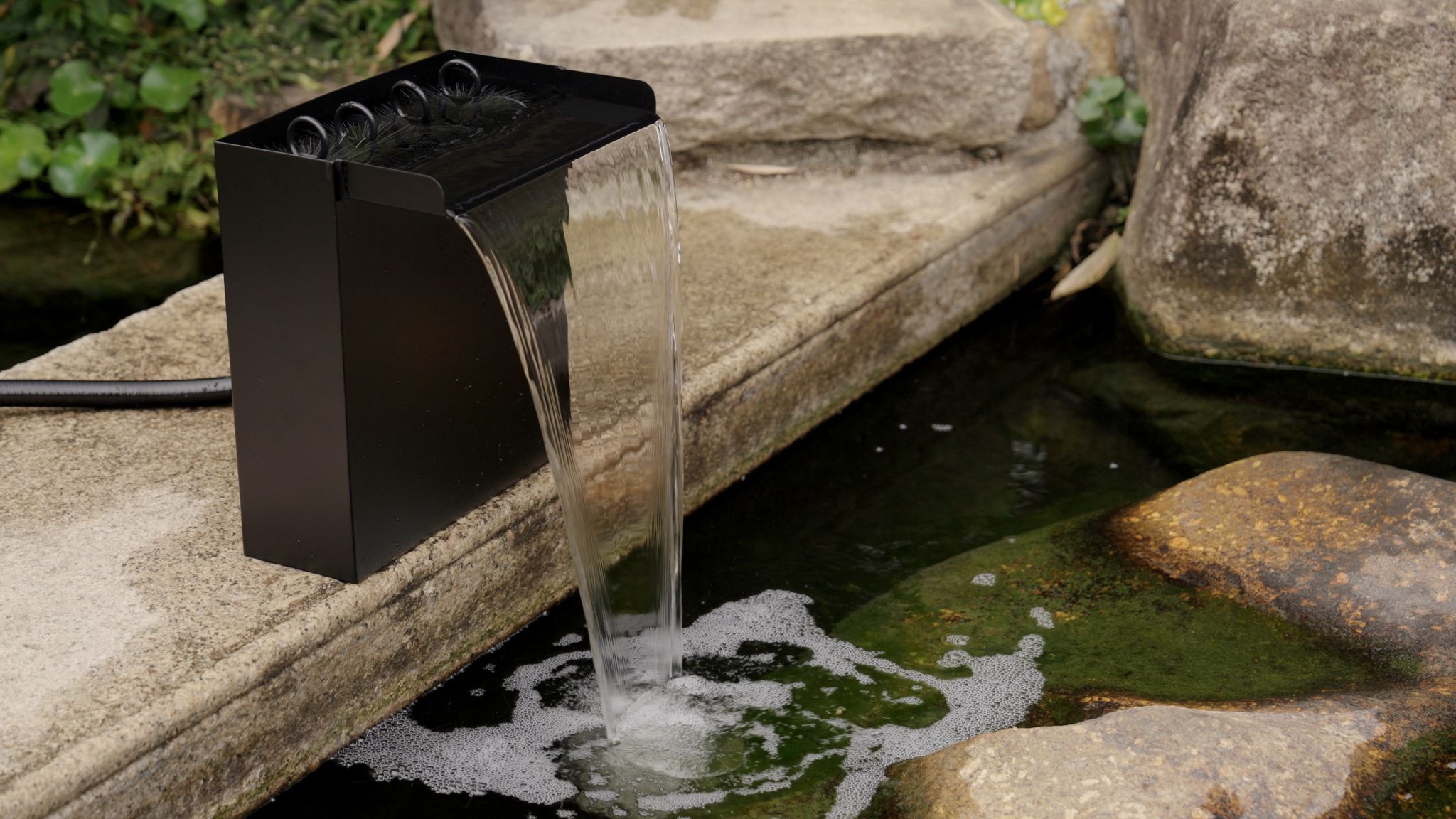
This is the structure that water flows into before cascading over the edge to create the waterfall effect. It acts as the delivery point — water is pumped up to the weir, fills the chamber, and then spills over in a controlled, consistent flow. The width of the spillway determines the width of the waterfall, and different designs create dramatically different visual effects.
The Pump
Every waterfall needs a pump capable of moving water from the pond base up to the top of the waterfall. The pump's flow rate must be matched to both the size of the pond and the vertical height the water needs to travel — a measurement referred to as head height. Undersized pumps result in disappointing trickles; correctly sized ones produce the full, satisfying flow that makes a waterfall genuinely impressive.
Tubing and Fittings
The hose that connects the pump to the top of the waterfall needs to handle consistent water pressure over long periods. Most waterfall kits include appropriately rated tubing and the fittings needed to make secure, leak-free connections.
Installation Hardware
Brackets, connectors, and sometimes even basic instructions for integrating the waterfall into a pond edge or raised berm are typically included, making the setup process more straightforward for those doing it themselves.
Planning the Layout Before You Start
Jumping straight into installation without planning is one of the most common — and most avoidable — mistakes people make with waterfall projects. A few key decisions made before a single stone is moved will save significant time and effort later.
Height and Flow
How tall do you want the waterfall to be? Even a relatively modest drop of 30 to 45 centimeters can look striking when framed with the right rocks and plants. Taller falls are visually dramatic but require more pump power and a more stable structure to support the raised section.
Integration With the Pond
The waterfall should be positioned so that water flows back into the pond in a way that promotes full circulation. Placing the waterfall outlet at one end of the pond and the pump intake at the other maximizes the distance water travels, ensuring the entire pond volume benefits from filtration and oxygenation rather than just a small section near the feature.
Rock Selection and Landscaping
Natural stone is the material of choice for most waterfall builders. Flat, layered stone works best for the actual water channel, allowing water to flow smoothly rather than splash erratically. Larger anchor stones frame the feature and give it structural presence. The gaps between rocks can be planted with moisture-tolerant species — creeping thyme, water-loving ferns, or ornamental grasses — to create a finished look that feels genuinely natural.
Common Mistakes to Avoid

Even with a quality waterfall kit in hand, a few missteps can undermine the final result.
Underestimating the Pump Requirement
Always calculate the flow rate needed based on head height, not just pond volume. A pump that seems adequate on paper may produce a frustratingly weak trickle once installed at height.
Poor Liner Integration
If the waterfall isn't properly connected to the pond liner, water will escape into the surrounding soil rather than returning to the pond. Over time, this can drain the pond significantly. Ensuring a watertight seal between the waterfall structure and the pond is non-negotiable.
Neglecting the Sound
The acoustic quality of a waterfall is shaped by the design of the drop. A wide, shallow lip creates a soft, sheeting sound, while a narrower channel produces more of a splashing effect. Think about what you want to hear from your patio or garden seating area before finalizing the design.
The Lasting Value of a Well-Built Waterfall
A waterfall built with care and the right components is a feature that genuinely improves with time. As plants mature around the edges, rocks develop natural patinas, and the pond ecosystem stabilizes, the whole feature begins to look as though it's always been there. That sense of permanence — of something natural and enduring — is what makes a waterfall kit one of the most satisfying investments a pond owner can make.
It's not just about adding visual interest to a garden. It's about creating a place where you actually want to spend time — a corner of your outdoor space that works on you quietly, the way only nature can.
Photo Gallery



Comments