Blog
How to Tell When Your Roof Needs Repairs Before It's Too Late
That little brown spot on your ceiling is not a stain.
It is a postcard from your attic, and the message reads: water found a way in.
Most homeowners wait until a bucket comes out or the drywall bubbles before
they think about their roof, and by then the repair bill has already doubled.
You do not need to climb anywhere or be a contractor to catch problems early.
You just need to know what to look for, and when.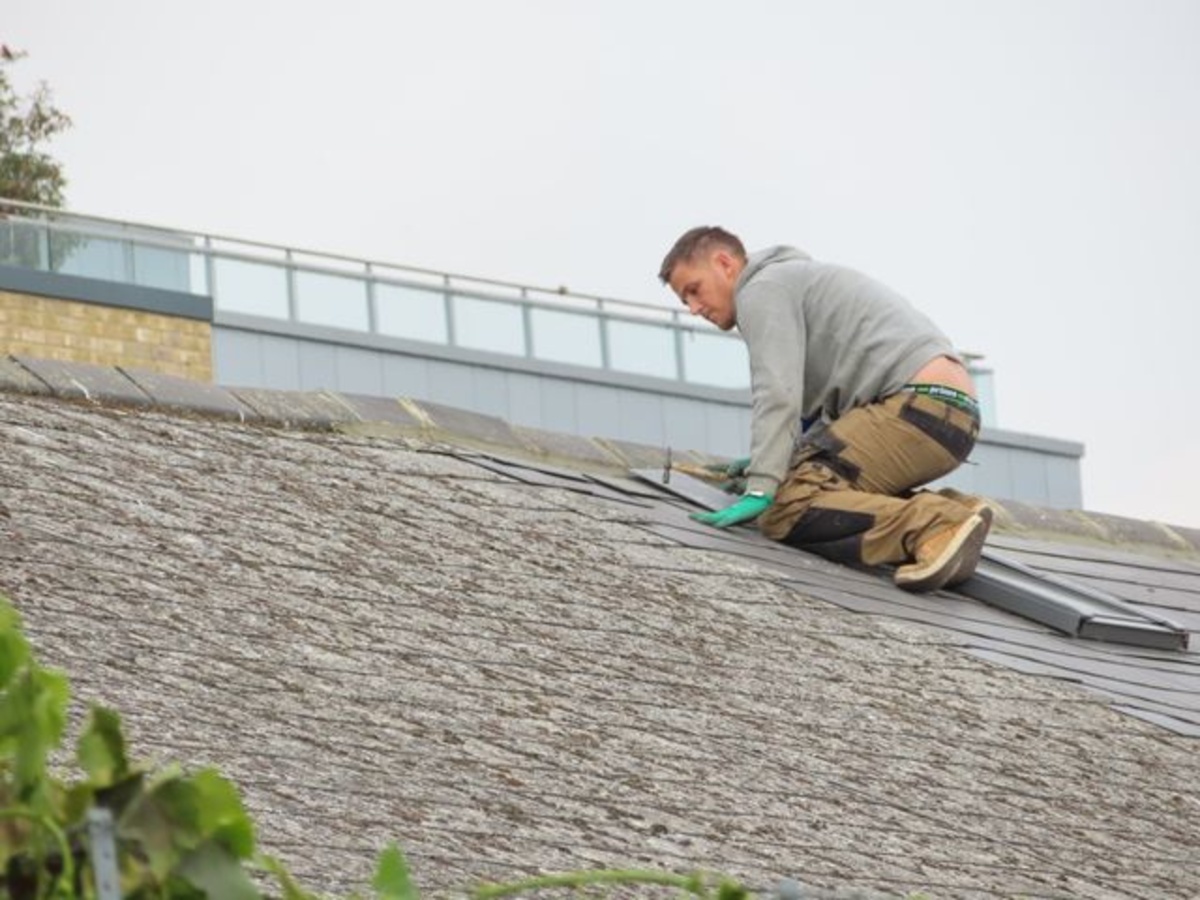
Photo by Keith
Why Small Roof Issues Snowball Fast
Your roof takes a beating every single day, and you
never see most of it. Sun bakes the shingles, wind flips their edges, rain
finds the tiniest gap under a flashing nail. According to the U.S. Department of Energy, a roof that is in
poor condition can raise cooling costs by more than 10 percent because the
attic lets conditioned air escape and lets heat pour in. That is money leaving
your house through a hole you did not even know existed.
The frustrating part is that a single missing shingle or
a lifted corner can sit there for months without making a peep. Then one hard
rain, one windy afternoon, and the water that was pooling near a weak spot
finally pushes through. What started as a $200 fix becomes a $2,000 interior
repair. So the real question is not whether your roof is leaking today. It is
where the next leak is already getting ready to happen.
The 4 Zones You Can Check From the Ground
Here is the good news: you do not need a ladder to catch
most problems. Grab a pair of binoculars, walk to the street, and circle your
house slowly. Look at the roof from every angle, and focus on four zones. This
takes about ten minutes, and it catches the majority of visible damage.
●
Field shingles: the big open areas. Look
for shingles that are curling up at the edges, buckling in the middle, or
missing entirely. Curled edges mean the shingle has lost its seal and wind can
get under it.
●
Valleys: the V-shaped lines where two
roof slopes meet. This is where the highest volume of water runs. Look for
cracked flashing or shingles that have pulled away from the metal.
●
Chimney and vent boots: the metal or
rubber collars around anything poking through the roof. Cracks in the rubber,
rust on the metal, or gaps around the base are all invitations for water.
●
Gutters: the unsung heroes. If you spot
granules from shingles piled up in the gutters or at the downspout corner, your
shingles are shedding their protective coating, which means they are aging
faster than they should.
Write down what you see. Take photos with your phone.
Doing this once in the spring and once in the fall turns a vague worry into a
concrete list you can act on.
What Climbing Into the Attic Tells You
The attic is the roof's report card, and most people
never check it. Put on old clothes, take a flashlight, and look at the
underside of the roof deck. You are hunting for three things: dark trails on
the wood, which are old water stains; bright spots of daylight, which mean
there is literally a hole; and patches of mold or mildew, which mean moisture
has been hanging around long enough to settle in.
Also run your hand along the insulation and the top of
the ceiling joists. If anything feels damp, or if the insulation is matted down
in a spot, that is a slow leak that has not reached your living space yet. It
will, though. Attics are the place where small problems become obvious months
before they ruin a ceiling in a bedroom, so an hour up there can save you a lot
of drywall work.
One safety note matters here. The Occupational Safety
and Health Administration lists falls as the leading cause of death in the
construction industry, and more than a third of those falls happen from roofs.
That statistic should stop you from doing your own roof walking. You can
inspect from the ground, and you can inspect from the attic. Leave the
shingle-level work to the pros.
When the Damage Is Not Visible at All
Here is the part that surprises people: some of the
worst roof damage leaves no trace on the outside. High winds can lift a shingle
just long enough to blow water underneath, then settle it back down looking
perfectly fine. The damage is hidden inside the layers. The same goes for ice
dams in winter, where water backs up under the shingles and drips into the
attic without ever touching the exterior face of the roof.
This is why seasonal weather events deserve your
attention. The National Oceanic and Atmospheric Administration tracks severe
thunderstorm and high wind events by state, and in Virginia, those events are a
regular part of spring and summer. If a bad storm rolls through your
neighborhood, consider that a prompt to do your ground-level check the next
morning, even if everything looks normal. Missing a shingle because you never
looked is one thing. Missing damage because you assumed the storm did no harm
is another.
A Simple Decision Framework for What to Fix Now
When you spot something questionable, run it through
this quick test. It keeps you from overreacting to minor issues and from
ignoring real ones.
The 24-hour test: is there water in your attic or on your ceiling right now? If yes, this is emergency territory. Get a professional out within a day, and put a bucket under the drip in the meantime.
The season test: is the issue a tiny crack in one vent boot that gets zero sun and zero rain exposure, or is it on a south-facing slope that takes every afternoon thunderstorm? The second one needs attention before the next rain.
The cost test: does the repair involve replacing
a few shingles, or does it require patching a large section of decking? The
first one is doable quickly. The second one deserves a professional estimate
before it grows.
For everything else, put it on a list and get it checked
at least once a year. You are looking for trends, not single events. One curled
shingle is an observation. Five curled shingles in the same section is a
pattern.
What a Professional Inspection Adds
Your ground-level walk covers maybe 60 percent of what a
trained eye will catch. A pro gets on the roof, checks the flashing around
every penetration, tests the seals, and looks at the decking from underneath.
They also spot the things you cannot see from the street, like nail pops or
shingles that are nearly loose but not quite lifted.
The good news is that many contractors offer free
inspections, so you have nothing to lose by getting a professional opinion. If
you have spotted any of the warning signs above, or if your roof is past its
fifteenth year, bringing in roof
repair services in Fredericksburg to take a look gives you a clear
baseline. You will finally know whether that stain is history or a live
problem.
A professional will also tell you what does not
need fixing, which is just as valuable. That stops you from paying for work you
do not need, and it gives you peace of mind during the next storm.
Build a Seasonal Roof Routine
You already change your furnace filter and flip your
mattress. Add a ten-minute roof check to that rhythm, and you remove the
surprise factor entirely. Here is a routine that takes about half an hour twice
a year:
1.
Walk the perimeter with binoculars and check the
four zones from the list above.
2.
Spend fifteen minutes in the attic with a
flashlight, looking for stains, daylight, or damp insulation.
3.
Photograph anything unusual and date the photos
so you can compare them next season.
4.
Take a look after any severe storm, even if the
forecast did not mention your exact street.
That is it. No ladders, no risk, no guesswork. You
become the early warning system for your own home, and you will never hear that
sickening drip in the middle of the night again.
Your roof is the only part of your house that works 24
hours a day, in every season, with zero maintenance from you. It deserves a
look twice a year. The next time a storm rolls through, are you going to know
what to check?
Photo Gallery



Comments