Blog
Eating Out or Cooking In? The Honest Math Nobody Wants to Do
Here's how dinner decisions usually get made: it's 6:30pm, everyone's hungry, nobody's planned anything, and the fridge holds a wilting half-onion and some optimistic leftovers from Tuesday. Suddenly, takeout feels less like a splurge and more like basic self-preservation.
We've all told ourselves the same story: cooking is cheaper, restaurants are a treat. And in a broad, technically-true sense, that's correct. But the actual decision — the one you're making on a Thursday evening when your motivation is at about 15% — is messier than that.
So let's look at what actually changes when you factor in both cost and calories. Not in theory. In real life.
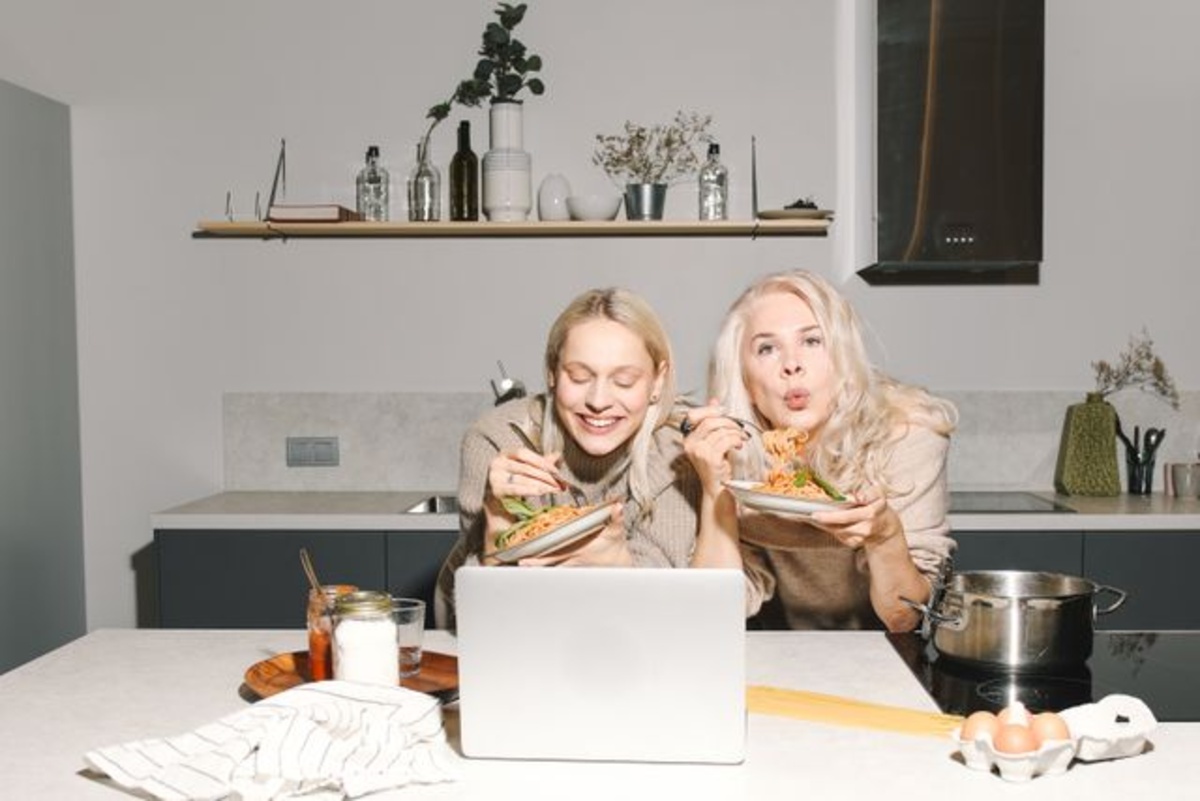
Photo by Polina Tankilevitch from Pexels
That menu price? It's just the opening bid.
The $14 pasta looks reasonable until you add tax, a delivery fee, a service charge, a tip, and suddenly you're paying $23 for pasta that arrives lukewarm. This isn't a gotcha — it's just how eating out actually works, and it's easy to forget in the moment when you're just clicking "place order."
The same math applies at restaurants. A family of four can sit down for what looks like a $60 dinner and leave having spent $90.
Why does this matter? Because food spending adds up faster than almost anything else in a household budget. In 2024, the average American household spent over $10,000 on food — roughly $6,200 on groceries and $3,900 dining out. Those aren't big dramatic purchases. They're dozens of small ones, made when you're hungry and tired and not exactly in the headspace for financial planning.
Getting a clear picture of the real cost before you order — adding tip — makes the trade-off visible. That visibility is the whole game.
Home cooking is cheaper. But only if the food gets eaten.
Here's what home cooking can actually do: a roast chicken on Sunday becomes lunch Monday, soup Tuesday, and sandwich filling Wednesday. A pot of lentils quietly feeds you for three days. Rice appears in three different meals without anyone complaining. Ingredients stack. Meals multiply. The per-serving cost shrinks.
That's the real advantage of cooking at home — not that any single meal is necessarily cheap, but that it creates options. Leftovers are free food. Future-you will appreciate past-you's effort.
The catch is that groceries are not savings until you actually use them. We've all done the thing where we buy ambitious ingredients for a meal we imagined cooking on a calm Tuesday, only for Tuesday to arrive chaotic and the cilantro to slowly give up hope in the crisper drawer. A full fridge that produces half-eaten meals and guilt is not a win over takeout.
Home cooking works when the plan is honest. Simple meals you'll actually make on the nights you're exhausted, not recipes you'll make once and abandon. Five ingredients, minimum effort, maximum repeat-ability.
You're eating about a third of your calories away from home. Do you know what's in them?
The FDA estimates that Americans consume roughly a third of their daily calories outside the home. That's not alarming on its own — eating out isn't inherently bad for you. But it does mean a significant chunk of what we eat comes with a lot of guesswork.
Restaurant meals have a way of accumulating calories in places you're not watching: the bread that arrives before you've decided anything, the dressing that was ladled on rather than drizzled, the soda refill you said yes to reflexively, the shared appetizer that "doesn't count" because you only had some of it. Chain restaurants with 20+ locations are now required to show calorie counts, which helps. But a huge amount of what we eat — local spots, catered work lunches, family dinners, that food truck — still leaves us guessing.
The goal isn't to turn every meal into a math problem. It's just to have some rough awareness of where you are in a week. People who manage their weight successfully tend to have a general sense of their daily target and intended calorie deficit— not a precise tally, but a ballpark. Without that, it's hard to know whether tonight's dinner is fine or quietly undermining a week's worth of effort.
Home cooking can absolutely fool you too.
I want to push back on something, because it drives me crazy: the idea that cooking at home automatically means eating well. It doesn't.
A "home-cooked meal" can mean a butter-heavy pasta, a salad buried under half a bottle of ranch, a smoothie that's functionally a milkshake, or just... a lot of food, portioned generously, eaten while standing over the stove because you were hungry. None of these things are disasters. But they're not the light, virtuous meal the fantasy implies.
What home cooking actually gives you is control. You choose the portion. You choose whether cheese is a garnish or a main character. You can add a vegetable, skip the sauce, make less pasta than the box suggests. You can pack tomorrow's lunch before second helpings happen.
That control is nearly impossible to exercise when someone else is making your food. And it's the real reason cooking at home tends to support better eating — not some inherent virtue in the act of chopping an onion.
The four questions worth asking at 6:30pm
Instead of the tired "should we eat out or cook?" debate, try these:
What will this actually cost? Add the fees, the tip, the drinks. Write the real number.
Will cooking tonight create useful leftovers, or just dishes? If it's a 45-minute recipe with six components, maybe not. If it's a one-pan thing you know by heart, maybe yes.
How does this fit into the rest of the week? Tuesday's takeout might be fine if the rest of the week is home-cooked. If it's the fourth night in a row, that's different information.
Is the convenience worth it tonight? Sometimes yes. Genuinely. A brutal workday, a sick kid, a week that's already asked too much — these are valid reasons. Food choices aren't character tests. They're trade-offs.
The smartest dinner isn't always the cheapest one, or the lowest-calorie one. It's the one that fits your actual Thursday without making next Thursday harder. Sometimes that's takeout. Sometimes that's scrambled eggs at home. Occasionally, on a good week, it's that roast chicken that feeds you for four days.
You'll know which one it is — once you stop just looking at the plate and start counting the whole bill.
Photo Gallery


Comments