Blog
Production Flexibility as a Competitive Advantage in Manufacturing
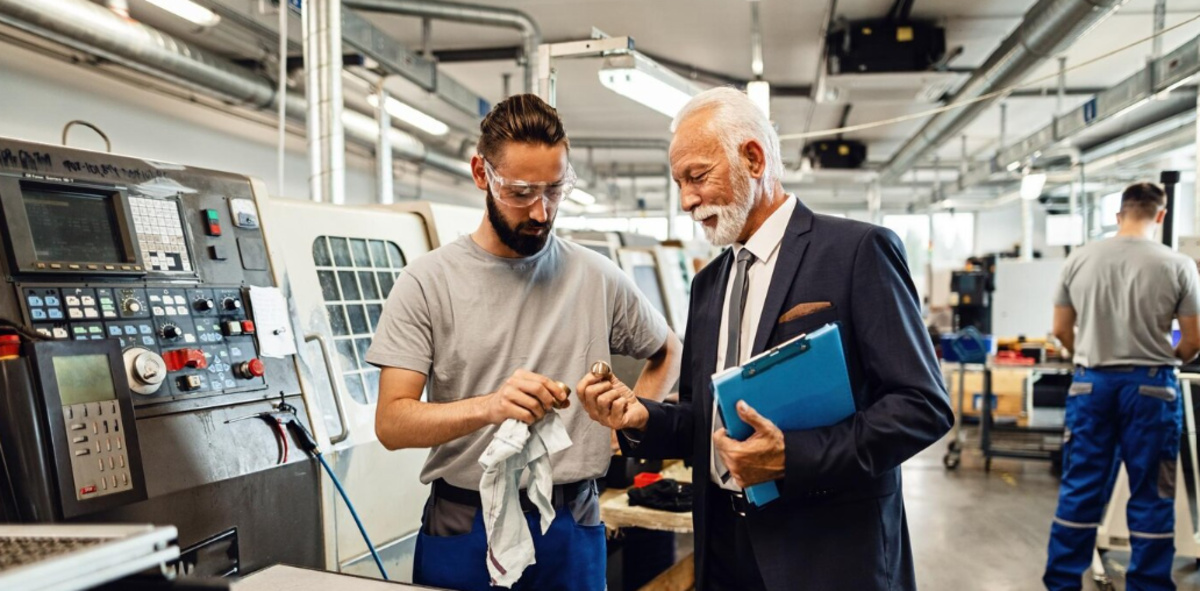
A customer changes the order mix, a supplier misses a delivery, and your production schedule no longer matches demand. Equipment may be busy, yet the parts customers need are unavailable. Manufacturers competing on unit cost alone can struggle when their operating assumptions change.
Production flexibility offers another advantage: the ability to adjust products, quantities, and schedules while controlling quality and cost. The OECD’s Supply Chain Resilience Review identifies agility, adaptability, and alignment as foundations of resilience.
For manufacturers, that means preparing options before disruption occurs. Flexible production helps businesses respond to changing requirements without rebuilding the entire operation each time.
What Does Production Flexibility Mean?
Production flexibility is the ability to change what you make, how much you make, or how you make it within acceptable limits. When evaluating a thermoforming manufacturer, for example, buyers should assess tooling, batch sizes, material options, and revision requirements alongside quoted prices.
Flexibility has several dimensions:
Product mix: Switching between different parts or variants.
Volume: Increasing or reducing output as demand changes.
Routing: Moving work through an approved alternative process.
Delivery: Adjusting schedules without losing control of commitments.
Assess each capability separately; material choice does not establish available capacity.
Why Can Flexibility Create a Competitive Advantage?
Flexibility matters when customers value responsiveness as well as price. Shorter replenishment cycles can help them avoid buying large quantities simply to secure availability.
Manufacturers may also introduce variants or accommodate engineering changes without committing immediately to dedicated high-volume production.
Consider a hypothetical equipment company selling several enclosure configurations. Producing smaller batches against current orders could reduce exposure to unsold versions when demand shifts.
However, smaller batches are not automatically cheaper. More frequent setups, inspections, and purchasing transactions can increase costs.
The competitive advantage comes from matching production to demand while protecting margins. It should appear in reliable deliveries, manageable inventory, and profitable order acceptance, rather than unrestricted customization.
Match Manufacturing Processes to Likely Changes
Different processes offer different kinds of flexibility. Choose based on geometry, materials, tolerances, expected quantities, and how the product may change.
Thermoforming can suit plastic trays, covers, housings, and panels. It forms a heated sheet over or into tooling, followed by trimming and other finishing steps.
A common formed shape may support certain variants through different trimming operations. Changes to the formed geometry, however, can require tooling modifications or replacement.
Injection molding may suit demanding features and sustained production volumes, while additive manufacturing can support revisions without dedicated molds. CNC machining offers another option when stock materials and machined features fit the requirement.
Compare complete routes, including tooling, fixtures, finishing, inspection, and assembly. No process provides unlimited flexibility at every quantity or specification.
Reduce Changeover Friction
Equipment cannot respond quickly if every product switch requires lengthy searching, adjustments, or troubleshooting.
The EPA’s guidance on cellular manufacturing describes layouts designed to shorten cycle and changeover times. The practical lesson is to examine how work moves, not just how fast individual machines operate.
Record a changeover from the last acceptable part of one run to the first acceptable part of the next.
Identify tasks that can be prepared beforehand, such as staging materials, checking tooling, and loading approved instructions.
Standardize repeatable setup steps and verify quality after each change. Faster switching is useful only when the new run starts correctly, and employees can perform the procedure safely.
Build Supplier and Workforce Options
Flexible equipment provides limited protection when only one person can operate it or one supplier can provide a critical material.
Cross-train employees on selected operations and maintain clear work instructions. Confirm competence before treating someone as backup capacity.
For critical inputs, investigate qualified alternatives and understand their actual availability. A second supplier on a spreadsheet is not a working contingency plan.
Material substitutions may affect performance, processing conditions, or customer approvals. Review them through the appropriate technical and quality procedures.
Confirm partner capacity, minimum orders, tooling ownership, and interruption procedures.
Measure the Cost of Flexibility Against Its Value
Extra options have costs: spare tooling, training, qualification, reserved capacity, and additional inventory. Invest where they address meaningful commercial risks.
Use a simple decision test: what does the option cost, which disruption does it address, and how much loss could it reasonably prevent?
Compare measures such as:
Review measures together; smaller batches can increase defects or overtime.
Start With One Valuable Constraint
Identify the recurring change that causes the most disruption. It might be frequent product switches, uncertain demand for variants, or dependence on a difficult-to-replace input.
Pilot one improvement, establish a baseline, and review quality, delivery, and cost afterward.
Production flexibility becomes a competitive advantage when the business can absorb important changes predictably. Build options around real constraints and verify that customers and margins both benefit.
Frequently Asked Questions
Is production flexibility the same as excess capacity?
No. Excess capacity means resources are available; flexibility means they can support the required change. Spare machine hours provide little value if tooling, materials, employee skills, or quality approvals prevent producing the needed part.
Does flexible manufacturing always reduce costs?
No. Smaller batches and alternative routes can increase setup, inspection, and qualification expenses. Evaluate those costs against reduced inventory exposure, fewer missed deliveries, and the ability to accept worthwhile orders under changing demand.
Can thermoforming support product variants?
Yes, depending on the design. Some variants may share a formed shape and differ through trimming or finishing. Changes to contours, dimensions, or material requirements may need different tooling or additional process qualification.
How should a small manufacturer improve flexibility first?
Start with a recurring bottleneck and a measurable improvement, such as preparing tooling before changeover or training backup operators. Test the change on one product family before making broader equipment, staffing, or supplier commitments.
Photo Gallery




Comments